

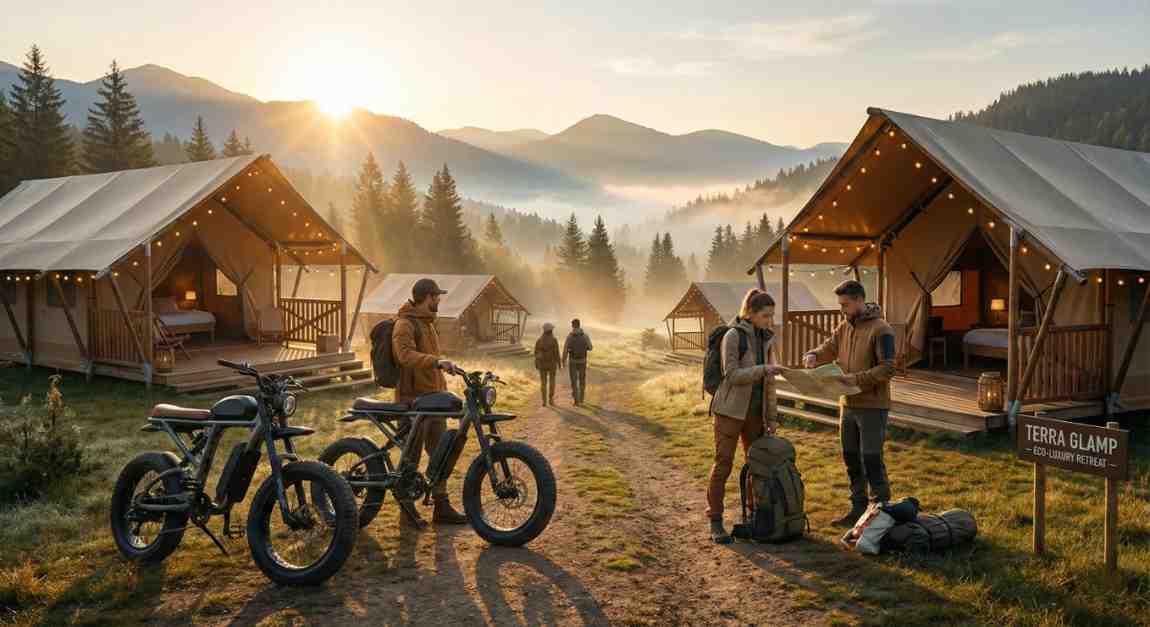
The outdoor recreation landscape is experiencing a remarkable transformation, where the rustic charm of camping converges with modern luxury and cutting-edge technology. This evolution, often referred to as “Glamping 2.0,” represents a new frontier in outdoor experiences that combines the comfort and sophistication of high-end accommodations with genuine wilderness adventures. At the heart of this revolution lies an unexpected hero: the off-road electric bike, which is redefining how enthusiasts explore and engage with the natural world.
The Evolution of Glamping
Glamping—a portmanteau of “glamorous” and “camping”—has come a long way since its inception. What began as safari-style canvas tents with proper beds has evolved into an industry offering everything from transparent dome structures under starlit skies to repurposed vintage Airstreams equipped with full kitchens and spa-like bathrooms. The original glamping concept addressed a fundamental tension: the desire to experience nature without sacrificing comfort.
Glamping 2.0 takes this concept further by integrating sustainable technology and adventure sports into the luxury camping experience. It’s no longer just about the accommodations; it’s about creating a holistic outdoor lifestyle that balances indulgence with genuine exploration. Modern glampers want more than a comfortable bed in the wilderness—they want to actively engage with their environment in ways that feel both exhilarating and accessible.
Enter the Off-Road E-Bike Revolution
Off-road electric bikes have emerged as the perfect complement to the luxury camping experience, bridging the gap between passive relaxation and extreme adventure. These sophisticated machines combine the mechanical simplicity of traditional mountain biking with battery-powered assistance that democratizes access to challenging terrain.
Unlike their conventional counterparts, off-road e-bikes feature robust motors, typically ranging from 250 to 750 watts, that provide pedal assistance on steep climbs and technical terrain. With fat tires designed for sand, snow, and rocky paths, advanced suspension systems, and batteries offering 30 to 100 miles of range, these bikes transform how people explore remote areas.
The synergy between e-bikes and glamping is natural and profound. Guests staying at luxury camping sites can venture much farther into wilderness areas than traditional hiking would allow, all while returning to their comfortable accommodations without the complete exhaustion that might accompany such adventures. This combination creates a unique value proposition: genuine wilderness exploration with the assurance of returning to comfort.
Redefining Accessibility and Inclusivity
One of the most significant impacts of pairing e-bikes with glamping is the democratization of outdoor adventure. Traditional backcountry camping and mountain biking require substantial physical fitness, technical skills, and often years of experience. This reality has historically excluded many people from fully engaging with wilderness areas.
Off-road e-bikes change this equation dramatically. The pedal-assist technology allows riders of varying fitness levels to tackle terrain that would otherwise be prohibitive. A family with members ranging from teenagers to grandparents can now share trail experiences, with each person receiving the level of assistance they need. Someone recovering from an injury or managing a chronic condition can still access remote viewpoints and hidden valleys.
This accessibility extends to the psychological barriers many people face regarding outdoor recreation. The knowledge that you have electric assistance available reduces anxiety about overextending yourself miles from your basecamp. This safety net encourages people to push their boundaries and discover capabilities they might not have explored otherwise.
The Technology Behind the Experience
Modern off-road e-bikes represent remarkable feats of engineering. The latest models feature sophisticated torque sensors that detect how hard a rider is pedaling and adjust motor assistance accordingly, creating a natural riding experience that amplifies human effort rather than replacing it. Regenerative braking systems recapture energy on descents, extending range and providing better control on technical terrain.
Battery technology has advanced to the point where high-capacity lithium-ion packs can be fully recharged overnight using solar arrays common at upscale glamping sites. Some luxury camping operations have even integrated e-bike charging stations powered entirely by renewable energy, aligning with the environmental values many glampers hold.
GPS integration, fitness tracking, and trail mapping applications turn these bikes into exploration platforms. Riders can download topographic maps, receive turn-by-turn navigation, and discover curated routes that highlight scenic viewpoints, wildlife viewing areas, or cultural landmarks. This technology integration enhances the experience without diminishing the sense of adventure—riders still feel like explorers, just better-equipped ones.
Environmental Considerations and Sustainable Tourism
The environmental impact of combining luxury camping with e-bikes deserves careful consideration. Done thoughtfully, this pairing can actually promote more sustainable tourism practices. E-bikes produce zero direct emissions and cause significantly less trail erosion than motorized vehicles like ATVs or dirt bikes. Their quiet operation minimizes wildlife disturbance, allowing riders to observe animals in their natural habitats without causing undue stress.
High-end glamping operations increasingly embrace sustainability as a core value, implementing solar power systems, water conservation technologies, and waste reduction programs. The addition of e-bikes fits naturally within this framework, offering guests low-impact transportation that reduces the need for vehicle shuttles and promotes deeper environmental engagement.
However, responsible implementation requires attention to trail management and capacity limits. Popular destinations must balance access with conservation, potentially implementing reservation systems for e-bike trails or restricting certain sensitive areas to foot traffic only. The glamping industry has an opportunity to model best practices in this regard, demonstrating that luxury and environmental stewardship can coexist.
The Social Experience and Community Building
Glamping 2.0 with e-bikes creates unique opportunities for social connection and community building. Many luxury camping sites now offer guided e-bike excursions led by local experts who share knowledge about ecology, geology, indigenous history, and wildlife. These shared adventures forge bonds between guests and create memorable experiences that extend beyond individual recreation.
The communal aspects of glamping—shared dining experiences, evening campfires, group activities—combine beautifully with daytime e-bike adventures. Guests return from their explorations with stories to share, fostering a sense of camaraderie even among strangers. This social dimension addresses growing concerns about isolation in modern society and the decline of face-to-face interaction.
E-bikes also enable different types of group dynamics. Because riders can adjust their assistance levels independently, groups with varying fitness levels can stay together on trails, maintaining conversation and shared experiences that would be impossible if stronger riders continually had to wait for slower companions. This inclusive dynamic particularly appeals to families and friend groups with diverse abilities.
Economic Impacts and Industry Growth
The convergence of luxury camping and e-bike recreation represents a substantial economic opportunity. The global glamping market has been growing at approximately 14 percent annually, while e-bike sales have exploded, with some markets seeing year-over-year increases of 50 percent or more. The overlap between these markets creates synergies that benefit both industries.
For rural and remote communities, this trend offers economic development opportunities that align with conservation goals. Areas with beautiful landscapes but limited traditional tourist infrastructure can develop glamping sites that attract affluent visitors who spend money on accommodations, guided services, and local products. E-bike rentals and charging infrastructure create additional revenue streams while requiring relatively modest investment compared to other tourism amenities.
Equipment manufacturers have taken notice, developing products specifically designed for the glamping market. Premium e-bike brands now offer models with features like integrated storage for camera equipment, wine bottle holders, and even attachments for picnic supplies—nods to the luxury camping demographic that wants adventure without sacrificing comfort or style.
The Future of Outdoor Recreation
Looking ahead, the integration of off-road e-bikes with luxury camping points toward broader trends in outdoor recreation. As climate change makes certain traditional destinations less accessible or desirable during peak seasons, e-bikes enable travelers to comfortably explore during shoulder seasons or discover alternative locations that were previously considered too remote or challenging.
Advances in battery technology and motor efficiency will continue expanding possibilities. Extended range capabilities might enable multi-day e-bike expeditions with lightweight, comfortable camping gear, blending bikepacking traditions with electric assistance. Solar-charging technology integrated directly into bike components could eventually eliminate range anxiety.
Virtual and augmented reality integration represents another frontier. Imagine e-bike rides enhanced with historical overlays showing how landscapes looked in different eras, or wildlife identification systems that provide real-time information about animals observed on trails. These technologies could deepen environmental education while maintaining the authentic physical experience of riding through nature.
Conclusion
Glamping 2.0, where luxury camping meets off-road e-bikes, represents more than a passing trend in outdoor recreation. It reflects evolving values about how we interact with nature, who gets to participate in wilderness experiences, and how we balance comfort with authenticity. By lowering barriers to entry while raising the quality of accommodations and equipment, this movement invites broader and more diverse participation in outdoor recreation.
The marriage of sophisticated camping experiences with electric-assist mountain biking creates opportunities for genuine connection with natural environments without demanding the extreme fitness or technical expertise that has historically limited wilderness access. It promotes environmental awareness through immersive experiences while leveraging technology to minimize impact. Most importantly, it demonstrates that luxury and adventure, comfort and challenge, technology and nature need not be opposing forces but can combine to create experiences that honor both human desires and environmental values.
As this sector continues evolving, the emphasis should remain on thoughtful development that prioritizes sustainability, inclusivity, and authentic engagement with the natural world. Done well, Glamping 2.0 with off-road e-bikes can introduce millions of people to the transformative power of wilderness experiences, fostering the environmental consciousness necessary to protect these precious places for generations to come.
For more…