

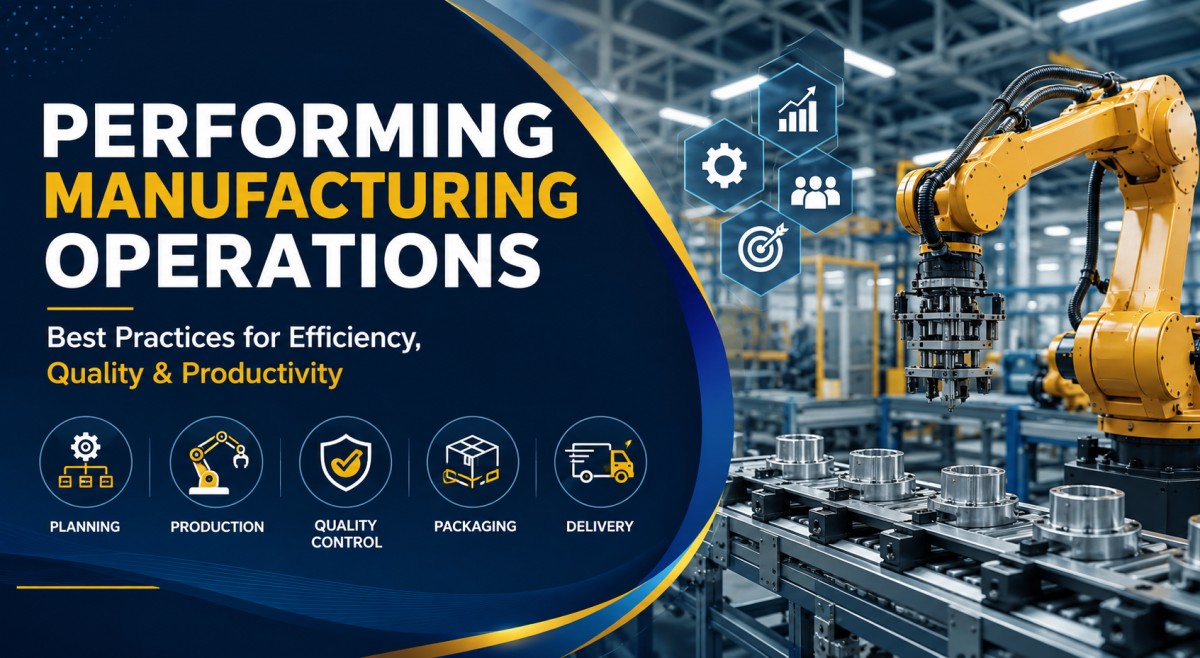
Manufacturing is the backbone of many industries, from automotive and electronics to food processing and pharmaceuticals. Every product goes through a series of carefully planned activities before reaching the customer. Performing manufacturing operations efficiently is essential for producing high-quality products, reducing costs, and meeting customer expectations.
Whether you’re managing a production facility, planning to enter the manufacturing industry, or exploring performing manufacturing operation jobs, understanding the fundamentals of manufacturing operations can help you improve productivity and build a successful career.
What Are Manufacturing Operations?
Manufacturing operations refer to the complete set of processes involved in converting raw materials into finished goods. These operations include planning, production, quality inspection, equipment maintenance, inventory management, packaging, and distribution.
Every manufacturing business follows a structured workflow to ensure products are produced consistently while maintaining safety and quality standards.
Some common manufacturing operations include:
- Material preparation
- Machining and fabrication
- Assembly
- Welding
- Painting and finishing
- Quality inspection
- Packaging
- Storage and shipping
Each step plays a crucial role in ensuring the final product meets customer and regulatory requirements.
Why Performing Manufacturing Operations Efficiently Matters
Efficient manufacturing operations provide several benefits for businesses, including:
- Improved Product Quality: Well-managed manufacturing processes reduce defects and ensure products meet quality standards.
- Increased Productivity: Optimized workflows allow businesses to produce more products in less time without compromising quality.
- Lower Operating Costs: Reducing material waste, machine downtime, and production delays helps improve profitability.
- Better Customer Satisfaction: Timely production and consistent product quality lead to higher customer trust and repeat business.
- Stronger Competitive Advantage: Companies with efficient manufacturing systems can respond faster to market demand and adapt to changing customer needs.
Key Stages of Performing Manufacturing Operations
1. Production Planning
Production planning determines:
- Production schedules
- Resource allocation
- Workforce requirements
- Machine availability
- Material procurement
A well-planned production schedule minimizes delays and improves operational efficiency.
2. Raw Material Management
Manufacturers depend on a reliable supply of quality raw materials.
Best practices include:
- Maintaining supplier relationships
- Monitoring inventory levels
- Reducing excess stock
- Using inventory management software
Efficient inventory control prevents production interruptions.
3. Equipment Setup and Maintenance
Machines are the foundation of modern manufacturing.
Regular maintenance helps:
- Prevent unexpected breakdowns
- Increase equipment lifespan
- Improve workplace safety
- Maintain consistent production quality
Preventive maintenance is usually more cost-effective than emergency repairs.
4. Production Execution
This is where raw materials are transformed into finished products.
Production activities may involve:
- Cutting
- Molding
- Welding
- Casting
- Assembly
- Printing
- Surface treatment
Standard operating procedures (SOPs) help ensure consistency across production lines.
5. Quality Control
Quality control ensures products meet customer expectations before shipment.
Common quality checks include:
- Visual inspection
- Dimensional measurement
- Functional testing
- Performance testing
- Safety compliance verification
Early detection of defects reduces rework and waste.
6. Packaging and Distribution
After passing quality inspection, products are packaged and prepared for shipment.
Proper packaging protects products during transportation and improves customer experience.
Best Practices for Performing Manufacturing Operations
Standardize Work Processes
Documented procedures reduce errors and improve consistency across production teams.
Every employee should understand:
- Production steps
- Safety procedures
- Machine operation
- Quality requirements
Invest in Employee Training
Well-trained employees make fewer mistakes and operate equipment more efficiently.
Training should cover:
- Equipment handling
- Workplace safety
- Quality standards
- Process improvements
- Problem-solving techniques
Continuous learning helps employees adapt to new technologies.
Focus on Workplace Safety
Manufacturing environments often involve heavy machinery and hazardous materials.
Safety measures include:
- Personal protective equipment (PPE)
- Regular safety inspections
- Emergency response plans
- Machine safety guards
- Employee safety training
A safe workplace improves productivity and reduces downtime caused by accidents.
Monitor Key Performance Indicators (KPIs)
Manufacturers should regularly measure operational performance.
Important KPIs include:
- Production output
- Machine utilization
- Defect rate
- Downtime
- Cycle time
- Inventory turnover
- On-time delivery rate
Tracking these metrics helps identify opportunities for improvement.
Reduce Waste
Waste reduction improves profitability while supporting sustainable manufacturing.
Examples include:
- Minimizing excess inventory
- Reducing scrap materials
- Optimizing energy usage
- Improving production planning
- Recycling reusable materials
Many manufacturers adopt Lean Manufacturing principles to eliminate unnecessary activities.
Adopt Automation
Automation can improve manufacturing operations by reducing repetitive manual tasks.
Examples include:
- Robotic assembly
- Automated quality inspection
- Conveyor systems
- CNC machining
- Warehouse automation
Automation helps increase production speed while maintaining consistency.
Improve Communication Across Departments
Manufacturing involves multiple departments working together.
Strong communication between:
- Production
- Purchasing
- Quality assurance
- Maintenance
- Logistics
- Sales
helps reduce delays and improve coordination.
Technologies Supporting Modern Manufacturing Operations
Today’s manufacturing industry increasingly relies on advanced technologies.
Popular technologies include:
- Industrial automation
- Internet of Things (IoT)
- Artificial Intelligence (AI)
- Manufacturing Execution Systems (MES)
- Enterprise Resource Planning (ERP)
- Robotics
- Predictive maintenance software
- Digital twins
- Cloud-based production management
These technologies improve visibility, decision-making, and production efficiency.
Common Challenges in Manufacturing Operations
Even experienced manufacturers face operational challenges.
Some common issues include:
- Equipment Downtime: Unexpected machine failures can delay production and increase costs.
- Labor Shortages: Finding skilled workers remains a challenge in many manufacturing sectors.
- Supply Chain Disruptions: Delayed raw material deliveries can interrupt production schedules.
- Rising Production Costs: Increasing labor, energy, and material costs require manufacturers to improve efficiency.
- Quality Issues: Poor quality control can result in product recalls, customer complaints, and financial losses.
Addressing these challenges requires continuous improvement and proactive planning.
Career Opportunities: Performing Manufacturing Operation Jobs
The manufacturing industry offers a wide range of career opportunities for professionals with different skill levels. Performing manufacturing operation jobs involves operating machinery, monitoring production processes, maintaining quality standards, and ensuring workplace safety.
Some common job roles include:
- Manufacturing Operator
- Production Operator
- Machine Operator
- CNC Operator
- Assembly Line Worker
- Production Technician
- Manufacturing Engineer
- Production Supervisor
- Quality Control Inspector
- Maintenance Technician
- Process Engineer
- Operations Manager
These roles exist across industries such as automotive, aerospace, electronics, pharmaceuticals, food processing, consumer goods, and industrial equipment manufacturing.
Skills Required for Manufacturing Operation Jobs
Employers often look for candidates with skills such as:
- Machine operation
- Technical troubleshooting
- Attention to detail
- Quality inspection
- Blueprint reading
- Safety compliance
- Team collaboration
- Time management
- Problem-solving
- Basic computer literacy
Knowledge of Lean Manufacturing, Six Sigma, automation systems, or ERP software can further enhance career opportunities.
Tips for Improving Manufacturing Operations
Organizations looking to enhance operational performance should focus on:
- Creating standardized workflows
- Investing in employee development
- Performing regular equipment maintenance
- Implementing automation where practical
- Monitoring production data continuously
- Encouraging continuous improvement initiatives
- Strengthening supplier relationships
- Maintaining strict quality control standards
- Optimizing inventory management
- Promoting a strong safety culture
Small, consistent improvements often lead to significant long-term gains in productivity and profitability.
The Future of Manufacturing Operations
Manufacturing continues to evolve with advancements in automation, artificial intelligence, and smart factory technologies. Businesses are increasingly adopting connected systems that provide real-time production insights, predictive maintenance, and data-driven decision-making.
Sustainability is also becoming a major focus, with manufacturers investing in energy-efficient equipment, waste reduction strategies, and environmentally responsible production methods.
As technology advances, professionals working in performing manufacturing operation jobs will need to continuously update their skills to remain competitive in an increasingly digital manufacturing environment.
Final Thoughts
Performing manufacturing operations effectively requires careful planning, skilled employees, reliable equipment, strong quality control, and a commitment to continuous improvement. Businesses that optimize their manufacturing processes can reduce costs, improve product quality, and respond more effectively to changing market demands.
At the same time, the growing demand for skilled professionals means that performing manufacturing operation jobs continue to offer promising career opportunities across multiple industries. Whether you’re a business aiming to improve production efficiency or an individual pursuing a manufacturing career, understanding manufacturing operations is key to long-term success.