

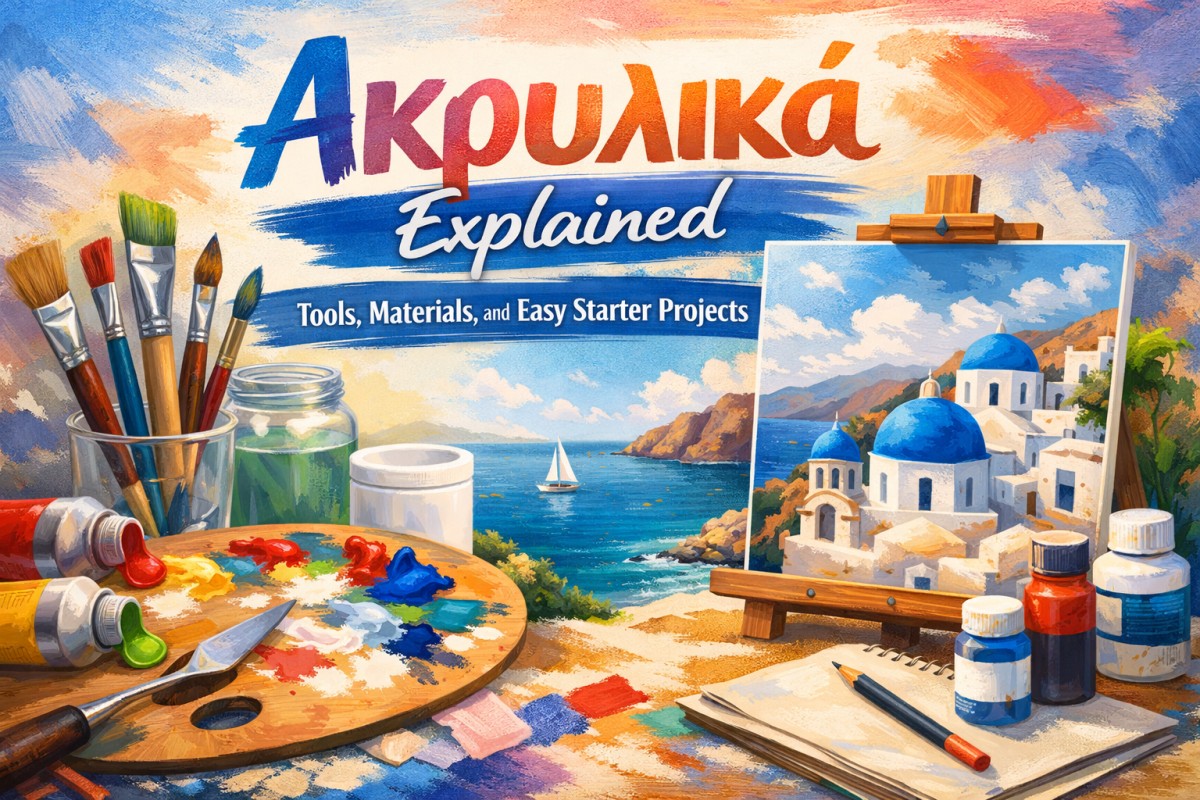
Acrylic painting, widely known as Akrylika (Ακρυλικά), has transformed the way artists and designers approach creative work. From vibrant canvas paintings to decorative crafts, murals, and modern interior décor, acrylic colours offer unmatched versatility. They are easy to handle, quick-drying, suitable for beginners, and powerful enough for professional use.
Unlike traditional oil paints that require long drying times and chemical solvents, acrylic paints are water-based, low-maintenance, and adaptable to multiple surfaces. This makes them an ideal choice for hobbyists, art students, DIY creators, and designers who want fast results without complicated preparation.
If you’re new to acrylic art or planning to build your first kit, this guide explains everything you need — from tools and materials to techniques and beginner-friendly projects.
What Are Akrylika (Acrylic Paints)?
Akrylika refers to acrylic polymer-based paints made with pigment, binder, and water. Once applied, water evaporates, leaving behind a flexible, durable paint film. This results in bright colors that resist cracking and fading over time.
Because of their unique composition, acrylic paints can imitate different styles. They can look like watercolour when diluted or resemble oil paints when applied thickly. This flexibility makes them a favourite for fine art, illustration, craft design, wall art, signage, and mixed-media projects.
Main Benefits of Acrylic Paints
- Fast drying time
- Rich and bold pigments
- Easy cleanup with water
- Works on canvas, wood, paper, fabric, glass, and more
- Long-lasting finish
- Suitable for indoor and outdoor projects
Essential Tools and Materials You Need
Starting with the correct supplies ensures smoother learning and better results. You don’t need expensive materials at first — just the basics.
1. Acrylic Paint Set
Choose either:
- Student-grade paints for practice and learning
- Artist-grade paints for deeper pigments and professional results
Begin with the primary colours (red, blue, and yellow), plus black and white. You can mix these to create almost any shade.
2. Brushes
Brushes play a key role in controlling strokes and textures.
- Flat brush – backgrounds and straight strokes
- Round brush – detailing and outlines
- Filbert brush – blending and soft edges
- Fan brush – foliage and textures
Synthetic bristles are best because they don’t damage acrylic paint.
3. Painting Surfaces
One of the biggest advantages of Akrylika is surface compatibility.
You can paint on:
- Stretched canvas
- Canvas boards
- Acrylic paper pads
- Wood panels
- Fabric or clothing
- Walls and décor items
Priming with gesso helps paint stick better and improves durability.
4. Palette and Mixing Tools
Use a palette tray or disposable sheets to mix colors. Palette knives are useful for mixing thick paint and creating textured effects.
5. Water and Cleaning Supplies
Keep water containers and cloths nearby to rinse brushes and prevent paint from drying on them.
6. Optional Mediums
Media modify paint behavior:
- Gloss or matte medium for finish control
- Retarder to slow drying time
- Gel medium for thickness
- Varnish for sealing artwork
Popular Acrylic Painting Techniques
Understanding basic techniques will help you control the medium and create professional-looking results.
Layering
Apply thin layers and allow each one to dry. This builds depth and enhances color strength.
Blending
Work quickly while the paint is wet to create smooth transitions between colours, perfect for skies or portraits.
Dry Brush
Use very little paint to create rough textures, highlights, or weathered effects.
Impasto
Apply thick paint using a palette knife to add dimension and texture.
Washing
Dilute paint with water to create a transparent, watercolour-like look.
Stippling and Sponging
Great for adding natural textures such as grass, clouds, or stone surfaces.
Easy Starter Projects for Beginners
Practice is the best teacher. Start small and focus on building skills rather than perfection.
Abstract Canvas Art
Experiment with color blending and shapes. No rules, just creativity.
Mini Landscapes
Paint simple mountains, sunsets, or trees to learn depth and perspective.
Home Décor Pieces
Decorate wooden frames, jars, or plant pots.
Fabric Customization
Design tote bags or T-shirts using fabric-safe acrylics.
Wall Quotes or Murals
Create motivational phrases or patterns for bedrooms or offices.
Greeting Cards and Gifts
Hand-painted bookmarks, mugs, or cards make thoughtful personalized gifts.
These beginner projects improve brush control and confidence.
Practical Tips for Better Acrylic Results
Even small habits can improve your painting quality.
- Work quickly because acrylic dries fast
- Mist your palette with water to keep paint fresh
- Clean brushes immediately after use
- Use thin layers to avoid cracking
- Store paints tightly sealed
- Varnish finished artwork for protection
Consistency and patience lead to better results than expensive supplies.
Applications of Akrylika in Art and Design
Acrylic paints are no longer limited to canvas art. Today, they are widely used in:
- Interior wall décor
- Murals and street art
- Signage and branding boards
- Craft and DIY projects
- Furniture painting
- School art programs
- Mixed media art
Their durability, colourfastness, and quick drying make them ideal for both creative and commercial uses.
Why Beginners Prefer Acrylics Over Other Mediums
Compared to oils and watercolors, acrylics offer a simpler learning curve. Oils take days to dry and require solvents, while watercolors demand precision. Acrylics provide the perfect balance — easy cleanup, fast results, and flexible techniques.
That’s why Akrylika is often the first medium recommended for beginners and design students.
FAQs
Is Akrylika suitable for beginners?
Yes, acrylic paints are beginner-friendly due to quick drying and easy cleanup.
Can acrylic paint be used on walls or furniture?
Yes, acrylics adhere well to walls, wood, and furniture when properly primed.
How long does acrylic paint last?
With proper sealing, acrylic artwork can last many years without fading.
Do I need special mediums?
Not necessarily. Mediums are optional and help create special effects or textures.
Can acrylics be mixed with other mediums?
Yes, they mix well with gels, pastes, and various additives for creative finishes.