

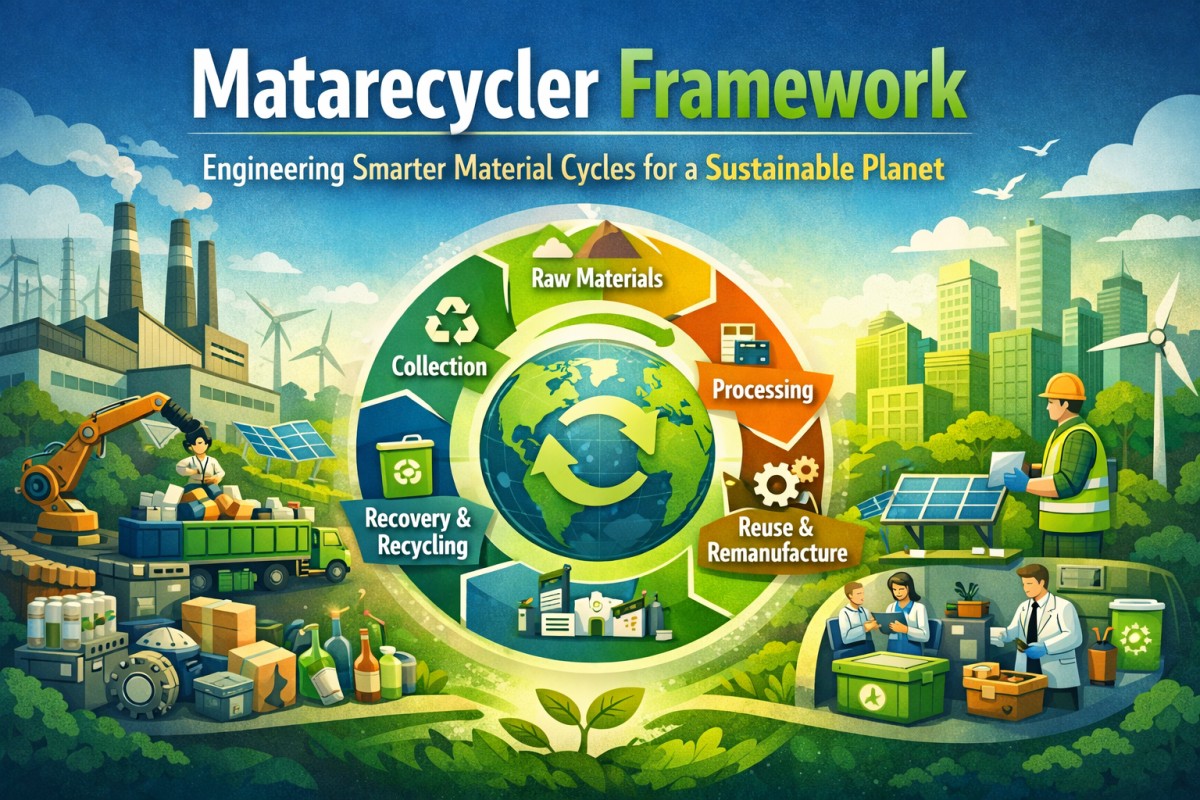
As industries expand and global consumption rises, pressure on natural resources intensifies. Traditional linear systems of “take, make, and dispose” have resulted in overflowing landfills, resource depletion, and environmental degradation. To build a greener future, we must transition toward intelligent, circular, and regenerative systems that keep materials in use for as long as possible.
This is where Matarecycler emerges as a transformative solution. The Matarecycler Framework offers a structured, science-driven approach to designing smarter material cycles that reduce waste, maximise recovery, and promote long-term sustainability. By integrating recycling, reuse, remanufacturing, and regeneration into a seamless flow, the framework helps industries, governments, and communities rethink how materials move through the economy.
In this blog, we explore how the Matarecycler Framework works, its benefits, implementation strategies, and why it is critical for building a sustainable planet.
Understanding the Need for Smarter Material Cycles
The modern economy has been largely linear for decades. Raw materials are extracted, converted into goods, consumed, and disposed of. This approach has created three major challenges:
- Massive waste generation
- Resource scarcity
- Increased carbon emissions
Every year, millions of tons of valuable materials end up in landfills or the ocean, while industries spend more money extracting new resources. This inefficiency harms both the environment and business profitability.
Smarter material cycles aim to eliminate this waste by ensuring materials continuously circulate within the system. Instead of disposal, materials are recovered, repaired, reused, or repurposed.
The Matarecycler concept was developed precisely to solve this problem.
What is Matarecycler?
Matarecycler is a sustainability-driven model that optimises the lifecycle of materials through intelligent recovery, reuse, and regeneration. Rather than treating waste as an endpoint, it treats waste as a resource.
At its core, Matarecycler promotes:
- Closed-loop recycling
- Efficient resource management
- Waste minimization
- Environmental protection
- Economic value creation
It connects every stage of a product’s life — from sourcing to post-consumer recovery — into one continuous system.
Related post: Autoamina and the Rise of AI-Driven Automotive Innovation
What is the Matarecycler Framework?
The Matarecycler Framework is the structured methodology that powers the Matarecycler model. It provides a step-by-step process for designing, monitoring, and improving sustainable material cycles across industries.
The framework integrates:
- Collection
- Segregation
- Processing
- Recovery
- Reuse
- Regeneration
- Reintegration into production
This systematic flow ensures that materials never truly become waste. Instead, they are continuously transformed into new value.
Read also: SEO by HighSoftware99.com: Where Strategy Meets Results
Key Components of the Matarecycler Framework
1. Smart Collection Systems
Efficient collection is the foundation of sustainable recycling. The framework emphasises organised collection networks, digital tracking, smart bins, and logistics optimisation to prevent material loss.
2. Segregation and Sorting
Proper separation improves recovery rates. Advanced sorting technologies, including automated systems and AI-based classification, ensure materials are processed accurately.
3. Processing and Recovery
Recovered materials are cleaned, treated, or refined. Metals are melted, plastics are reprocessed, and organic waste is composted or converted into bioenergy.
4. Reuse and Remanufacturing
Whenever possible, products are repaired or refurbished rather than destroyed. This saves energy and reduces raw material demand.
5. Reintegration into Production
Recovered resources are fed back into manufacturing, creating a continuous circular loop.
6. Monitoring and Optimisation
Data analytics track efficiency, recovery rates, and environmental impact, helping organisations constantly improve performance.
Benefits of Implementing the Matarecycler Framework
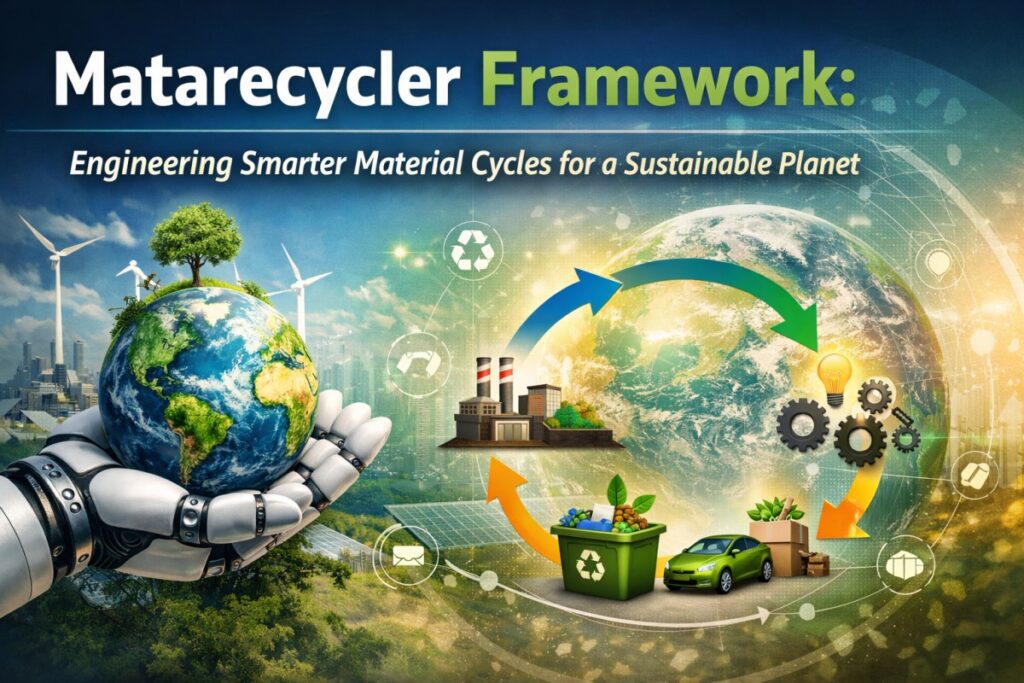
Environmental Benefits
- Reduced landfill waste
- Lower carbon emissions
- Conservation of natural resources
- Cleaner ecosystems
Economic Benefits
- Lower production costs
- Reduced dependency on raw materials
- New revenue streams from recovered resources
- Improved operational efficiency
Social Benefits
- Job creation in recycling industries
- Cleaner communities
- Enhanced corporate responsibility
The Matarecycler Framework creates value across all dimensions of sustainability — environmental, economic, and social.
Industries That Can Use Matarecycler
The flexibility of the Matarecycler system makes it suitable for multiple sectors:
Manufacturing
Reduces raw material procurement and waste disposal costs.
Construction
Recycles concrete, metals, and wood into reusable materials.
Electronics
Recovers valuable metals like copper and gold from e-waste.
Packaging
Promotes reusable and biodegradable alternatives.
Municipal Waste Management
Improves city-level recycling efficiency and reduces reliance on landfills.
How Matarecycler Supports the Circular Economy
The circular economy aims to keep materials in use for as long as feasible. The Matarecycler Framework directly supports this by designing material flows that never end.
Instead of:
Raw Material → Product → Waste
It becomes:
Raw Material → Product → Recovery → Reuse → New Product
This shift dramatically reduces environmental pressure while boosting long-term sustainability.
Steps to Implement the Matarecycler Framework
Organisations looking to adopt Matarecycler can follow these steps:
Step 1: Conduct Material Flow Analysis
Identify where materials enter and leave the system.
Step 2: Set Recovery Goals
Define measurable targets for recycling and reuse.
Step 3: Develop Collection Infrastructure
Create efficient collection and sorting systems.
Step 4: Integrate Recycling Technologies
Use modern processing equipment to improve recovery rates.
Step 5: Monitor Performance
Track metrics like waste reduction, cost savings, and emissions.
Step 6: Optimise Continuously
Use data insights to refine processes.
Challenges and Solutions
Challenge: High Initial Investment
Solution: Long-term savings often outweigh upfront costs.
Challenge: Lack of Awareness
Solution: Training and education programs.
Challenge: Contaminated Waste
Solution: Better segregation at source.
With proper planning, these challenges can be easily addressed.
The Future of Sustainable Material Cycles
The future belongs to systems that combine technology, sustainability, and smart design. As governments tighten regulations and consumers demand eco-friendly practices, companies must adopt frameworks like Matarecycler to remain competitive.
The Matarecycler Framework is not just a recycling strategy — it’s a blueprint for a sustainable planet.
By turning waste into opportunity, we can protect resources, reduce emissions, and build a cleaner future for generations to come.
Frequently Asked Questions (FAQs)
1. What is Matarecycler?
Matarecycler is a sustainability-focused model that optimises material reuse, recycling, and regeneration to minimise waste.
2. What is the Matarecycler Framework?
It is a structured process that manages material cycles through collection, recovery, and reintegration into production.
3. How does Matarecycler help the environment?
It reduces landfill waste, lowers emissions, and conserves natural resources.
4. Which industries can use the Matarecycler Framework?
Manufacturing, construction, packaging, electronics, and municipal waste management.
5. Is the Matarecycler Framework expensive to implement?
Initial costs exist, but long-term savings and efficiency gains make it cost-effective.
6. Does Matarecycler support the circular economy?
Yes, it is specifically designed to create closed-loop systems aligned with circular economy principles.
7. Can small businesses adopt Matarecycler?
Yes, the framework is scalable for both small and large organisations.