

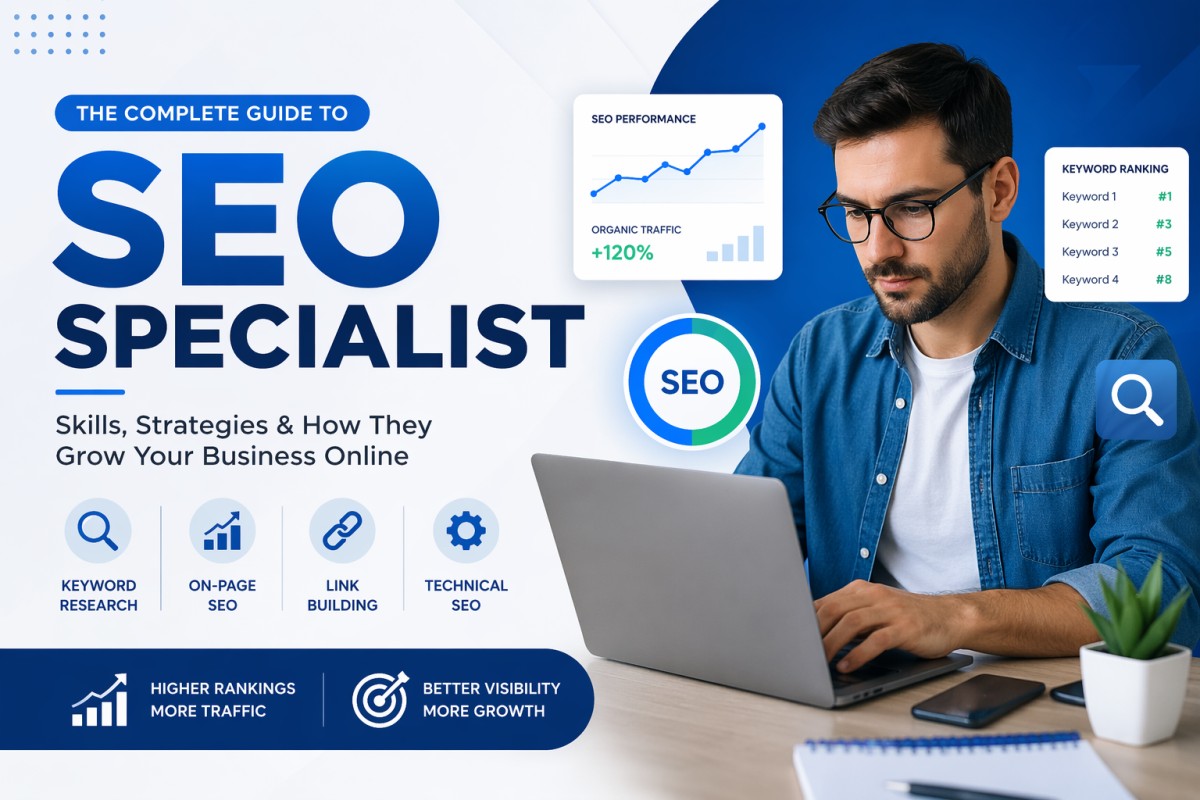
In today’s digital-first world, businesses don’t just compete locally—they compete globally. Whether you run a startup, a local service, or an established brand, your online visibility determines your growth. This is where an SEO specialist becomes essential. An SEO specialist is not just someone who “does keywords”—they are strategists, analysts, and digital architects who help websites rank higher, attract the right audience, and convert visitors into customers.
This blog will walk you through everything you need to know about an SEO specialist—their role, skills, importance, and how they can transform a business.
What is an SEO specialist?
An SEO specialist (Search Engine Optimization specialist) is a professional who optimizes websites to improve their rankings on search engines like Google. Their main goal is to increase organic (non-paid) traffic by making websites more relevant, user-friendly, and technically sound.
Unlike paid ads, SEO focuses on long-term results. A well-optimized website can generate traffic for months or even years without continuous spending.
Why SEO is Important in 2026
Search engines have become smarter than ever. With AI-driven algorithms, search intent matters more than just keywords. Users expect fast, relevant, and high-quality results.
Here’s why SEO is more important than ever:
- Over 90% of online experiences begin with a search engine
- Organic traffic is more cost-effective than paid ads
- Higher rankings build trust and credibility
- Local SEO helps businesses dominate nearby markets
Without SEO, even the best website can remain invisible.
Key Responsibilities of an SEO Specialist
An SEO specialist wears many hats. Their work goes far beyond just adding keywords to content.
1. Keyword Research
They identify what people are searching for and target those keywords strategically. This involves understanding user intent—whether someone wants to buy, learn, or compare.
2. On-Page SEO Optimization
This includes optimizing:
- Title tags
- Meta descriptions
- Headings (H1, H2, etc.)
- Content structure
- Internal linking
The goal is to make content both user-friendly and search engine-friendly.
3. Technical SEO
A strong technical foundation ensures search engines can crawl and index the site properly. Tasks include:
- Improving site speed
- Fixing broken links
- Optimizing mobile responsiveness
- Implementing structured data
4. Content Strategy
Content is the heart of SEO. Specialists plan blogs, landing pages, and articles that attract and engage users.
5. Link Building
Building high-quality backlinks from reputable websites boosts domain authority and rankings.
6. Analytics and Reporting
SEO specialists track performance using tools like Google Analytics and Search Console. They analyze:
- Traffic sources
- Keyword rankings
- User behavior
- Conversion rates
Skills Every SEO Specialist Must Have
To succeed in SEO, a specialist needs a mix of technical and creative skills.
Analytical Thinking: SEO involves data interpretation. Specialists must understand trends and make data-driven decisions.
Technical Knowledge: Basic knowledge of HTML, website structure, and CMS platforms like WordPress is essential.
Content Writing Skills: They must understand how to create engaging, optimized content that ranks and converts.
Problem-Solving Ability: Search algorithms change frequently. SEO specialists must adapt quickly and find solutions.
Communication Skills: Explaining SEO strategies to clients or teams clearly is crucial.
Types of SEO
An SEO specialist typically works across three main areas:
1. On-Page SEO: Focuses on optimizing elements within the website like content, keywords, and structure.
2. Off-Page SEO: Involves external factors like backlinks, brand mentions, and social signals.
3. Technical SEO: Deals with backend improvements like site speed, indexing, and security.
SEO Specialist vs Digital Marketer
Many people confuse SEO specialists with digital marketers. While there is overlap, they are different:
- SEO Specialist: Focuses mainly on organic search traffic
- Digital Marketer: Handles SEO, social media, ads, email marketing, and more
An SEO specialist is more focused and deeply skilled in search optimization.
Tools Used by SEO Specialists
To perform efficiently, SEO specialists rely on various tools:
- Google Analytics – Traffic analysis
- Google Search Console – Performance tracking
- Ahrefs / SEMrush – Keyword research and backlinks
- Screaming Frog – Technical SEO audits
- Yoast SEO – On-page optimization (WordPress)
These tools help in making accurate and effective decisions.
How an SEO Specialist Helps Businesses Grow
Hiring an SEO specialist can significantly impact business growth. Here’s how:
Increased Website Traffic: Higher rankings bring more visitors to your website.
Better User Experience: SEO improves site speed, navigation, and content quality.
Higher Conversion Rates: Targeted traffic means more leads and sales.
Strong Brand Authority: Ranking on the first page builds trust among users.
Cost-Effective Marketing: Unlike ads, SEO provides long-term ROI.
SEO Trends in 2026
SEO is constantly evolving. Here are the latest trends every SEO specialist follows:
AI and Search Intent: Search engines now focus heavily on user intent rather than just keywords.
Voice Search Optimization: More users are using voice assistants, making conversational keywords important.
Mobile-First Indexing: Google prioritizes mobile versions of websites for ranking.
Core Web Vitals: Page experience signals like loading speed and interactivity matter more than ever.
E-E-A-T (Experience, Expertise, Authority, Trust): Content must demonstrate credibility and real-world experience.
How to Become an SEO Specialist
If you’re interested in becoming an SEO specialist, here’s a simple roadmap:
- Learn the basics of SEO
- Practice on your own website or blog
- Use SEO tools and understand analytics
- Stay updated with Google algorithm changes
- Build a portfolio of successful projects
Many professionals start with internships or freelance projects to gain experience.
Hiring the Right SEO Specialist
If you’re a business owner, choosing the right SEO specialist is critical. Look for:
- Proven track record
- Case studies or portfolio
- Knowledge of latest SEO trends
- Transparent reporting
- Ethical (white-hat) SEO practices
Avoid anyone promising “instant #1 rankings”—SEO takes time and strategy.
Common SEO Mistakes to Avoid
Even experienced businesses make these mistakes:
- Ignoring mobile optimization
- Using keyword stuffing
- Not updating old content
- Poor website speed
- Low-quality backlinks
An SEO specialist helps avoid these pitfalls and ensures sustainable growth.
Conclusion
An SEO specialist is no longer optional—it’s a necessity for any business that wants to succeed online. From improving search rankings to driving targeted traffic and boosting conversions, their role is crucial in digital success.
In 2026, SEO is smarter, more competitive, and more rewarding than ever. Businesses that invest in skilled SEO specialists gain a strong edge over competitors.
If you want long-term visibility, consistent traffic, and sustainable growth, working with an SEO specialist is one of the smartest decisions you can make.
FAQs
1. How long does SEO take to show results?
SEO usually takes 3 to 6 months to show noticeable improvements, depending on competition and strategy.
2. Is SEO better than paid ads?
SEO provides long-term results and better ROI, while ads give instant but temporary traffic. Both work best together.
3. Can I do SEO myself?
Yes, but it requires time, learning, and consistent effort. Hiring an expert can speed up results and avoid mistakes.