

Electronic invoicing, commonly known as eInvoice, has become an essential part of modern business operations. As companies continue to digitize their financial processes, eInvoicing helps improve efficiency, reduce errors, and ensure tax compliance. Whether you run a small business or a large enterprise, understanding how eInvoices work can help you streamline billing and accounting.
In this guide, we’ll explain what an eInvoice is, how it works, its benefits, and why businesses should adopt it.
What Is an eInvoice?
An eInvoice is a digital invoice that is created, validated, exchanged, and stored electronically in a structured format. Unlike a PDF invoice sent through email, an eInvoice is generated in a machine-readable format that accounting software and government portals can process automatically.
In many countries, including India, businesses meeting specific turnover requirements must generate eInvoices through the government’s Invoice Registration Portal (IRP).
How Does eInvoicing Work?
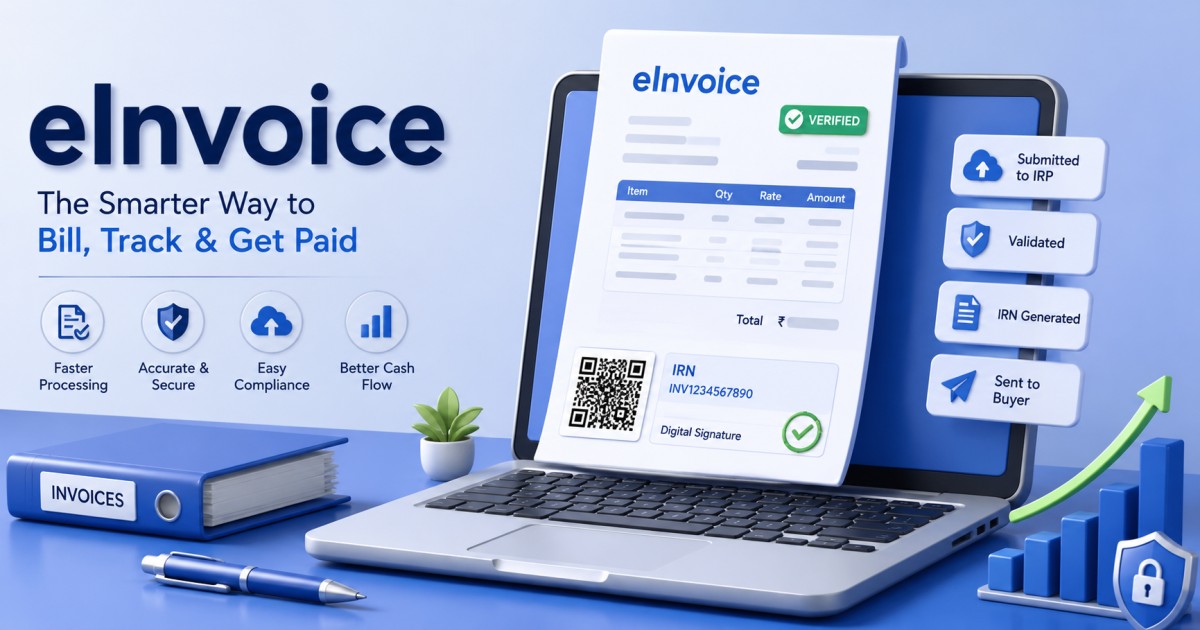
The eInvoicing process is straightforward and follows these steps:
- A business creates an invoice using its accounting or ERP software.
- The invoice details are submitted to the Invoice Registration Portal (IRP).
- The IRP validates the information.
- A unique Invoice Reference Number (IRN) is generated.
- A QR code and digital signature are added.
- The validated invoice is shared with the buyer and automatically integrated into GST reporting systems where applicable.
This automated process minimizes manual work and improves accuracy.
Key Features of eInvoice
Some important features of eInvoices include:
- Digital invoice generation
- Unique Invoice Reference Number (IRN)
- QR code verification
- Real-time validation
- Automated GST reporting
- Secure electronic storage
- Easy integration with ERP and accounting software
Benefits of eInvoice
1. Faster Invoice Processing
Invoices are generated, validated, and shared electronically, reducing delays in billing and payments.
2. Improved Accuracy
Automation eliminates manual data entry errors and minimizes duplicate invoices.
3. Better Tax Compliance
Businesses can comply with GST regulations more efficiently through automatic reporting.
4. Reduced Paperwork
Electronic invoicing significantly reduces paper usage, printing costs, and document storage expenses.
5. Faster Payments
Customers receive invoices quickly, helping businesses improve cash flow.
6. Better Record Management
Digital invoices are easy to search, retrieve, and audit whenever needed.
7. Enhanced Security
Digital validation and QR codes reduce invoice fraud and unauthorized modifications.
Who Should Use eInvoice?
eInvoicing is beneficial for:
- Small businesses
- Medium-sized enterprises
- Large corporations
- Manufacturers
- Exporters
- Wholesale distributors
- Service providers
- E-commerce businesses
Businesses covered under government eInvoicing regulations must generate eInvoices to remain compliant.
Common Components of an eInvoice
A standard eInvoice generally contains:
- Supplier information
- Buyer information
- GSTIN details
- Invoice number
- Invoice date
- Product or service description
- Quantity
- Unit price
- Tax amount
- Total invoice value
- Invoice Reference Number (IRN)
- QR code
Challenges of Implementing eInvoice
Although eInvoicing offers numerous advantages, businesses may face some initial challenges:
- Software upgrades
- Employee training
- ERP integration
- Data accuracy
- Internet dependency
- Initial implementation cost
However, these challenges are usually temporary, and the long-term benefits outweigh the setup effort.
Best Practices for eInvoicing
To make the most of eInvoicing:
- Choose reliable accounting software.
- Keep business and GST information updated.
- Train employees on eInvoice procedures.
- Validate invoice data before submission.
- Maintain secure digital backups.
- Regularly update software for compliance changes.
- Monitor rejected invoices and resolve issues promptly.
eInvoice vs Traditional Invoice
| Feature | eInvoice | Traditional Invoice |
|---|---|---|
| Format | Digital structured data | Paper or PDF |
| Processing | Automated | Manual |
| Accuracy | High | Moderate |
| Validation | Real-time | Manual |
| Storage | Electronic | Physical or PDF |
| Compliance | Easier | More manual effort |
| Processing Speed | Fast | Slower |
Industries Benefiting from eInvoice
Several industries have adopted eInvoicing successfully:
- Manufacturing
- Retail
- Healthcare
- Logistics
- Information Technology
- Construction
- Financial Services
- Wholesale Trade
- E-commerce
Tips for Successful eInvoice Adoption
Businesses should:
- Evaluate their current billing process.
- Select compatible invoicing software.
- Test integrations before full deployment.
- Ensure compliance with government regulations.
- Educate finance and accounting teams.
- Review invoice workflows regularly.
Future of eInvoice
The adoption of eInvoicing continues to grow worldwide as governments encourage digital tax compliance and businesses seek greater efficiency. Future developments may include:
- AI-powered invoice validation
- Real-time payment integration
- Advanced fraud detection
- Cross-border eInvoicing standards
- Fully automated accounts payable and receivable systems
As digital transformation accelerates, eInvoices are expected to become the standard method of business invoicing.
Conclusion
eInvoice is transforming how businesses create, exchange, and manage invoices. It offers faster processing, improved accuracy, stronger compliance, and better financial management while reducing paperwork and operational costs. Whether your business is legally required to generate eInvoices or is considering adopting them voluntarily, implementing an electronic invoicing system can improve efficiency and support long-term growth.