

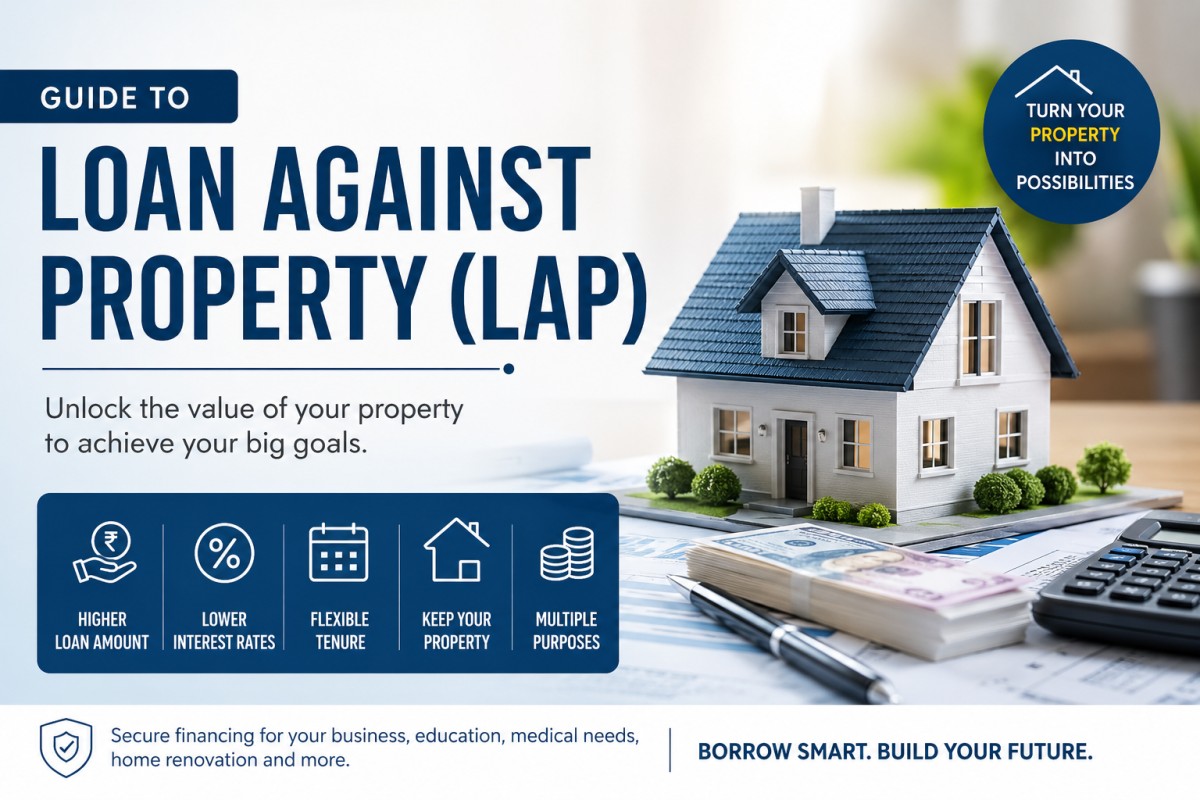
What Is a Loan Against Property (LAP)?
A Loan Against Property (LAP) is a secured loan that allows property owners to borrow funds by pledging their residential, commercial, or industrial property as collateral. Since the lender has security in the form of property, LAP typically offers higher loan amounts, lower interest rates, and longer repayment tenures compared to many unsecured loans.
Whether you need funds for business expansion, education, medical expenses, debt consolidation, or personal financial requirements, a Loan Against Property can be a practical financing option.
How Does a Loan Against Property Work?
When you apply for a Loan Against Property, the lender evaluates your property’s market value, income, repayment capacity, and credit profile. Based on these factors, the lender sanctions a percentage of the property’s value as a loan. The property remains in your possession while the lender holds a legal charge until the loan is fully repaid.
Key Features of Loan Against Property
- Higher Loan Amounts: Since the loan is backed by property, borrowers can access substantial funding based on the property’s valuation.
- Competitive Interest Rates: LAP generally offers lower interest rates than personal loans because it is a secured lending product.
- Flexible Repayment Tenure: Many lenders provide repayment periods extending up to 15 to 20 years, making EMIs more manageable.
- Continued Property Ownership: You can continue using your residential or commercial property while repaying the loan.
- Multiple End-Use Purposes: Funds obtained through LAP can be utilized for various personal and business needs, subject to lender guidelines.
What Types of Properties Can Be Used for LAP?
Most lenders accept:
- Residential property
- Commercial property
- Industrial property
- Self-occupied property
- Rented property
The property’s legal status, age, location, and marketability influence loan approval.
Who Can Apply for a Loan Against Property?
Generally, the following applicants are eligible:
- Salaried individuals
- Self-employed professionals
- Business owners
- Partnership firms
- Proprietorship firms
- Private limited companies
Eligibility criteria vary across lenders.
What Are the Eligibility Criteria for LAP?
- Age Requirement: Most lenders require applicants to be between 21 and 70 years of age.
- Stable Income: A consistent source of income helps demonstrate repayment capacity.
- Good Credit Score: A strong credit profile improves approval chances and may help secure better loan terms.
- Property Ownership: The property must be legally owned and free from major disputes.
Documents Required for Loan Against Property
Identity Proof
- Aadhaar Card
- PAN Card
- Passport
- Driving License
Address Proof
- Utility bills
- Passport
- Aadhaar Card
Income Documents
For Salaried Individuals:
- Salary slips
- Bank statements
- Form 16
For Self-Employed Applicants:
- Income Tax Returns
- Profit and Loss Statement
- Business financial records
- Bank statements
Property Documents
- Title deed
- Sale deed
- Property tax receipts
- Approved building plan
- Occupancy certificate (if applicable)
What Is the Maximum Loan Amount Available Under LAP?
Most lenders finance approximately 50% to 75% of the property’s market value. The actual amount depends on:
- Property valuation
- Applicant’s income
- Credit score
- Existing financial obligations
- Lender policies
How Is the Interest Rate Determined?
Several factors influence LAP interest rates:
- Credit history
- Income stability
- Property type
- Loan amount
- Loan tenure
- Lender policies
Comparing loan offers before applying can help you secure favorable terms.
What Can a Loan Against Property Be Used For?
- Business Expansion: Business owners can use LAP to fund operations, purchase equipment, hire staff, or expand into new markets.
- Education Expenses: LAP can support higher education costs, including tuition fees and living expenses.
- Medical Emergencies: Borrowers can access funds for treatment and healthcare-related needs.
- Debt Consolidation: Combining multiple high-interest debts into a single LAP can simplify repayments.
- Home Renovation: Funds can be used to renovate or improve residential property.
What Are the Benefits of Loan Against Property?
- Access to Large Funding: Borrowers can unlock the value of their property without selling it.
- Lower EMI Burden: Longer repayment tenures help reduce monthly installment amounts.
- Better Interest Rates: Secured lending often results in lower borrowing costs.
- Flexible Usage: Funds may be used for several personal and business purposes.
- Continued Property Usage: The property remains available for use throughout the loan tenure.
What Are the Risks of a Loan Against Property?
- Risk of Property Loss: Failure to repay the loan may result in legal action and property recovery by the lender.
- Longer Financial Commitment: Long repayment periods require careful financial planning.
- Additional Charges: Processing fees, legal fees, valuation fees, and other charges may apply.
How to Choose the Right LAP Offer?
Before finalizing a loan:
- Compare interest rates from multiple lenders.
- Check processing and hidden charges.
- Evaluate repayment flexibility.
- Review foreclosure and prepayment policies.
- Use a Loan Against Property EMI calculator.
- Read the terms and conditions carefully.
Should You Apply for a Loan Against Property?
A Loan Against Property can be a smart financing solution when you need substantial funds at competitive interest rates. However, because your property acts as collateral, it is important to borrow responsibly and ensure you can comfortably manage repayments.
Comparing lenders, understanding eligibility requirements, and calculating your EMI beforehand can help you make a well-informed decision.